Illinois is a major hub for plastic injection molding, with companies serving industries such as medical devices, industrial manufacturing, consumer products, and packaging. Its central location and access to major transportation networks make it a strategic base for manufacturers serving the Midwest and nationwide markets.
This guide is based on industry criteria including ISO certifications, production capabilities, cleanroom environments, and experience in regulated industries such as medical devices and packaging.
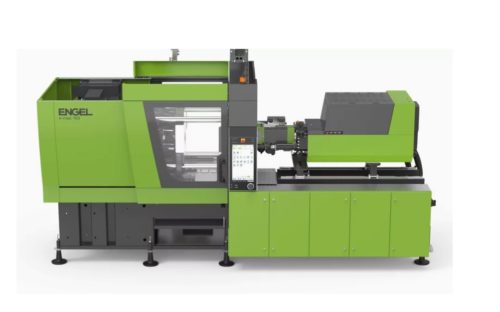
Why Illinois Is a Leading Injection Molding Hub
Illinois offers several advantages for companies seeking injection molding partners:
- Proximity to Chicago and major Midwest distribution centers
- Access to a skilled manufacturing workforce
- Strong presence in medical, industrial, and packaging industries
- Efficient logistics for serving both regional and national markets
Compared to coastal manufacturing regions, Illinois-based companies often provide faster delivery times and cost-effective distribution across the U.S. (For a broader comparison, see our guide to top plastic injection molding companies in the U.S.)
What Defines a “Top” Injection Molder in Illinois?
Not all molders are created equal. The leading companies typically demonstrate:
- Advanced automation and robotics
- High-cavitation, high-volume production capabilities
- ISO certifications (especially ISO 13485 for medical)
- Engineering support (DFM, tooling optimization)
- Cleanroom manufacturing for regulated industries
- Proven experience with mold transfers and complex programs
Companies such as AdvanTech Plastics offer all these attributes. The firm is included in industry rankings of top U.S. injection molding manufacturers.
🏆 Leading Plastic Injection Molding Companies in Illinois
1. Hoffer Plastics (South Elgin, IL)
A large, highly automated molder known for high-volume production and strong capabilities in packaging, medical, and consumer products. Hoffer is widely recognized for its scale and engineering depth.
2. Commercial Plastics Company (Mundelein, IL)
An established manufacturer with decades of experience, offering automation-driven molding and assembly services across multiple industries.
3. Hansen Plastics Corporation (Elgin, IL)
An employee-owned company with a strong reputation for quality and engineering, particularly in automotive and industrial applications.
4. AdvanTech Plastics (Woodstock, IL)
As an Illinois-based injection molding company, AdvanTech Plastics serves manufacturers throughout the Midwest with a focus on cleanroom production and high-precision applications. The company is particularly well-positioned for organizations that require local manufacturing support combined with advanced capabilities.
Key strengths include:
- ISO 13485-certified manufacturing
- Class 7 & Class 8 cleanroom environments
- High-cavitation and multi-cavity tooling
- Engineering support for product development
For Midwest-based companies, AdvanTech Plastics offers the advantage of regional proximity, faster turnaround times, and direct collaboration with engineering teams to support Midwest manufacturing operations.
5. Drummond Industries (Bensenville, IL)
A mid-sized custom molder offering end-to-end services including molding, assembly, and warehousing, with a strong focus on customer service and flexibility.
6. Janler Corporation (Chicago, IL)
A highly respected tooling and mold-making company with deep expertise in high-cavitation molds, particularly for packaging and medical applications.
7. HQC Incorporated (Oswego, IL)
Known for precision molding and engineering support, HQC serves packaging and industrial markets with a focus on tight tolerances and quality.
🔍Choosing an Illinois Injection Molding Company
When selecting a regional partner, companies should evaluate:
- Location and logistics advantages within the Midwest
- Experience with industry-specific requirements
- Availability of engineering and prototyping support
- Ability to scale from prototype to high-volume production
Illinois-based injection molders are often chosen for their ability to provide reliable, high-quality manufacturing with shorter supply chains. Mid-sized U.S. injection molders like AdvanTech Plastics fit that definition.
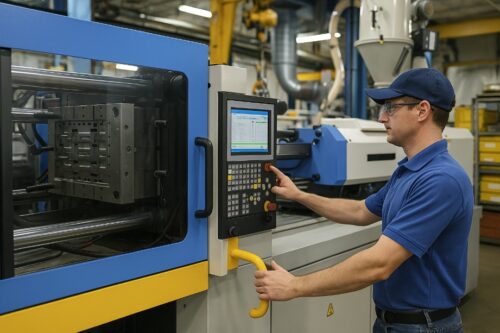
Why Illinois Is a Leading Manufacturing Hub
Illinois offers:
- Access to skilled labor and engineering talent
Frequently Asked Questions About Plastic Injection Molding Companies in Illinois
What should I look for in a plastic injection molding company in Illinois?
Look for a manufacturer with the right combination of technical capability, quality systems, industry experience, and production capacity. Key factors include ISO certifications, engineering support, automation, tooling expertise, secondary services, and experience in your specific market, such as medical devices, packaging, or consumer products.Why is Illinois a strong location for plastic injection molding?
Illinois has long been a major manufacturing center, with strong access to skilled labor, transportation networks, tooling resources, and industrial supply chains. Chicagoland in particular has a deep concentration of custom molders, toolmakers, and automation partners.How do I compare injection molding companies fairly?
Start by comparing certifications, molding capabilities, press sizes, automation level, cleanroom availability, secondary services, and industry focus. It also helps to evaluate responsiveness, mold transfer experience, quality performance, and whether the company can support both current needs and future scaling.What industries do top injection molders in Illinois typically serve?
Leading Illinois injection molders often serve medical device, food and beverage packaging, personal care, cosmetics, dental, electronics, automotive, and industrial markets. Some are broad-based, while others specialize in regulated or high-volume applications.Why is ISO 13485 important in injection molding?
ISO 13485 is a key certification for medical device manufacturing. It indicates that a company follows a quality management system designed for regulated medical markets, which can be important for OEMs seeking consistency, traceability, and compliance support.What is high-cavitation injection molding?
High-cavitation molding uses molds with many cavities to produce large volumes of identical parts in each cycle. It is especially common in packaging, caps and closures, and other high-volume applications where efficiency, consistency, and low per-part cost matter.What is the benefit of working with an injection molder that offers engineering support?
Engineering support can improve part design, reduce tooling issues, shorten cycle times, and lower overall production costs. Services such as design for manufacturability, prototyping, and process optimization help prevent problems before they affect production.Do all injection molding companies offer secondary services?
No. Some molders only produce parts, while others offer value-added services such as assembly, kitting, ultrasonic welding, pad printing, machining, inspection, and packaging. A full-service partner can reduce supply chain complexity and speed up delivery.What is a mold transfer, and why does experience matter?
A mold transfer happens when production tooling is moved from one supplier to another. This process can involve tooling repairs, validation, process redevelopment, and quality adjustments. A molder with mold transfer experience can often reduce downtime and improve part quality after the transition.How important is automation in plastic injection molding?
Automation can improve consistency, reduce labor variability, increase output, and support better quality control. For high-volume or precision applications, automated molding operations and robotic part handling are often a major advantage. - Proximity to major logistics and transportation networks
- A deep ecosystem of tooling, automation, and materials suppliers
This makes it an ideal location for companies seeking reliable, scalable manufacturing partners.
📞 Looking for a High-Performance Injection Molding Partner?
If your project requires precision, scalability, and regulatory compliance, working with an experienced partner is critical.
👉 Contact AdvanTech Plastics to discuss your next project and explore how optimized molding solutions can reduce costs and improve performance