The Challenge
A manufacturer relying on an existing injection mold was facing increasing concerns about production reliability, responsiveness and long-term supply continuity.
The mold itself was still viable, but the existing supplier relationship had become difficult to manage. Lead times were inconsistent, communication was slow and the customer had limited visibility into production scheduling, maintenance and quality controls.
Replacing the mold entirely would have required additional time and capital.
Instead, the customer needed a manufacturing partner capable of evaluating the existing tooling, transferring it into a new production environment and establishing a reliable molding process with minimal disruption.
The AdvanTech Solution
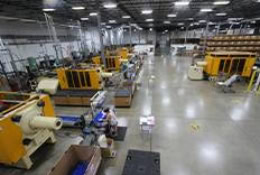
AdvanTech Plastics specializes in helping manufacturers transfer existing injection molds from another supplier and bring them into stable domestic production.
The process begins with a detailed review of the tooling and production requirements.
AdvanTech evaluates factors such as:
- Mold condition
- Mold dimensions and compatibility
- Resin requirements
- Part specifications
- Cooling and ejection systems
- Existing maintenance history
- Production volumes
- Quality requirements
- Secondary operations
- Packaging and delivery needs
This allows the AdvanTech team to identify potential issues before the mold enters full production.
Evaluating the Existing Tooling
One of the most important parts of a successful mold transfer is determining whether the tool is truly production-ready.
A mold may have been running for years while accumulating wear in areas such as gates, ejector systems, cooling circuits or cavity surfaces.
Moving the mold without evaluating those conditions can simply transfer the existing production problems to a new supplier.
AdvanTech reviews transferred tooling and identifies repairs, maintenance or process improvements that may help improve performance before full production begins.
The objective is not simply to move the mold.
It is to establish a repeatable manufacturing process around it.
Establishing a Controlled Production Process
Once the mold is installed, AdvanTech develops and validates the processing conditions necessary to produce consistent parts.
That includes establishing appropriate molding parameters such as temperature, pressure, cycle conditions and cooling.
Parts are then evaluated against the customer’s specifications before the program moves into routine production.
For applications requiring higher levels of documentation and traceability, AdvanTech can support production through its quality systems and certifications, including ISO 9001 and ISO 13485.
This provides customers with greater confidence that the transferred program is being managed within a disciplined manufacturing environment.
Reducing Supply Chain Risk
A mold transfer can also provide an opportunity to strengthen the customer’s overall supply chain.
Manufacturers often begin considering a transfer because of problems such as:
- Long lead times
- Quality concerns
- Poor supplier communication
- Capacity limitations
- Offshore logistics
- Supplier consolidation
- Business continuity concerns
- Increasing freight costs
Moving production to a responsive domestic injection molding partner can reduce dependence on complex logistics networks and make production planning easier.
AdvanTech can also coordinate inventory and release schedules around customer demand, helping manufacturers avoid unnecessary excess inventory while maintaining reliable product availability.
Improving Communication and Responsiveness
Injection molding programs rarely remain static.
Demand changes. Materials become difficult to obtain. Product designs evolve. Tooling eventually requires maintenance.
When those situations arise, the ability to communicate quickly with the molding supplier becomes extremely important.
With AdvanTech, customers work directly with a domestic manufacturing team that can evaluate production issues, tooling requirements and changing demand without the delays often associated with distant or fragmented supply chains.
That closer working relationship can make it easier to solve problems before they affect production.
The Result
By transferring the existing mold rather than immediately investing in entirely new tooling, the manufacturer was able to establish production with a new domestic supplier while preserving its existing tooling investment.
The program gained:
- Greater visibility into the molding process
- More responsive communication
- Improved supply chain control
- A documented approach to tooling evaluation and maintenance
- Greater flexibility in production planning
- Access to AdvanTech’s quality management systems and manufacturing capabilities
Most importantly, the mold transfer created a more stable foundation for future production.
When Does a Mold Transfer Make Sense?
A mold transfer may be worth considering when a manufacturer is satisfied with the basic tool design but dissatisfied with the supplier producing the parts.
It can also make sense when a company is:
- Reshoring production
- Consolidating suppliers
- Experiencing delivery problems
- Facing recurring quality issues
- Preparing for increased production volume
- Moving regulated products to a more controlled manufacturing environment
In many cases, transferring an existing tool can be significantly faster and less costly than designing and building a completely new mold.
Need to Transfer an Existing Injection Mold?
AdvanTech Plastics helps manufacturers evaluate, transfer and establish production using existing injection molds.
Whether the objective is improved quality, shorter lead times, better communication or greater supply chain control, AdvanTech can help determine the best path for moving an existing molding program.
Talk with AdvanTech Plastics about transferring your injection mold and establishing reliable domestic production.
This case study is representative of the types of mold-transfer challenges AdvanTech Plastics helps manufacturers address. Specific project details have been generalized.